My main project focuses on the interaction of social movements and political regimes, which mutually transform each other. It recognizes the active role of individuals and organizations while considering the strength of state structures. I analyze these interaction’s causes, dynamics, and sociopolitical consequences.
In parallel, I also conduct studies on environmental disasters and migration dynamics in Central America and how socioeconomic and historical conditions intervene in them.
Publications

Revista Mexicana de Sociología
Monseñor Romero en las protestas antirrepresión en Nicaragua. Un símbolo en disputa.
Monsignor Romero’s legacy was used by Nicaraguan opposition protesters against repression and by Sandinistas to justify actions against the political right. While the frame initially had an impact, it was not consistently used, indicating a lack of cohesive strategies. This article emphasize the need to evaluate the effectiveness of frames based on their impact, durability, and perceived authority.
Revista Eutopía – Universidad Rafael Landívar.
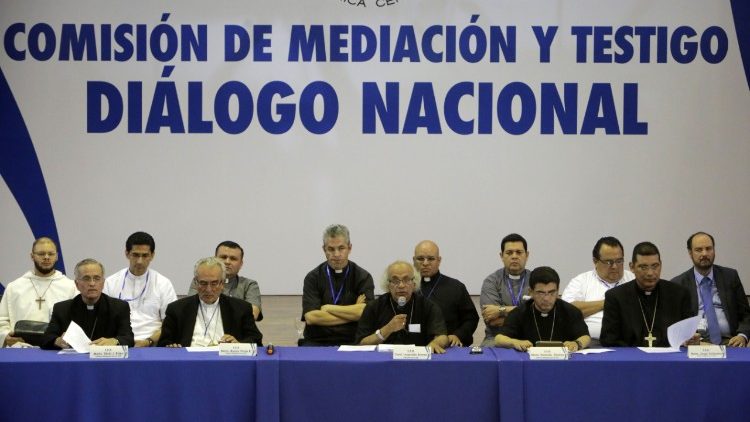
«Los años pasan y nadie es eterno»: La Iglesia católica en la consolidación autoritaria en Nicaragua 2006-2017.
This article analyzes the Catholic Church’s role in the country’s shift towards authoritarianism betwen 2007-2018. It demonstrates the church’s evolving perceptions and escalating language and tactics, resembling its involvement in 20th-century authoritarian regimes and representing a new manifestation of its influence in democratization movements.
Anuario de Estudios Centroamericanos
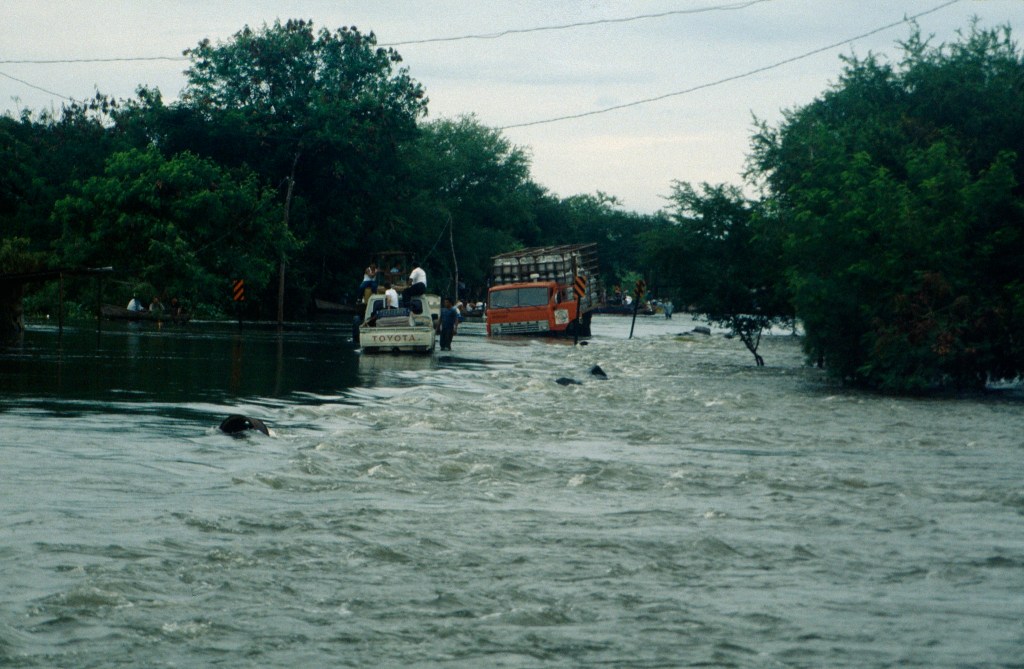
Una región en riesgo: oportunidades, vacíos y desafíos para la investigación social de desastres en Centroamérica
Central America faces increasing natural disaster risks. This study explores how the social sciences have studied the topic in the region. While older events have received attention, there is insufficient research on recent disasters. Analysis from the LAPOP 2021 survey confirms the significance of the topic.
Wiley Blackwell Encyclopedia of Social and Political Movements 2e.
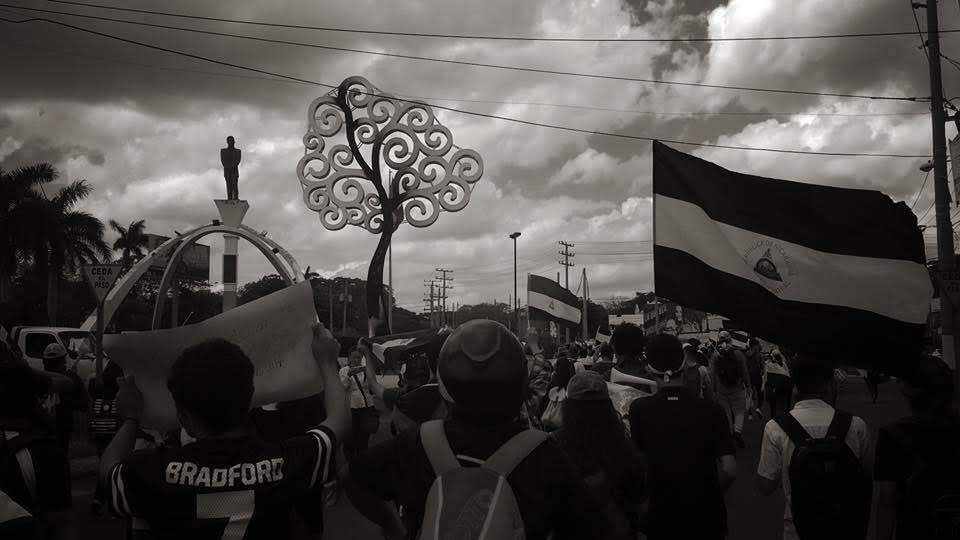
Antirepression protests in Nicaragua: An authoritarian transformation
In 2018, Nicaragua faced a cycle of contention against Ortega’s rule, a Sandinista leader. With repression that successfully crushed the mobilization, he consolidated an authoritarian regime, which persists until today. This entry analyzes how this regime transformation occurred amid the cycle of contention. Protest event analysis techniques describe the mobilizations, which comprised +2000 demonstrations in less than six months.
Canadian Journal of Latin American and Caribbean Studies
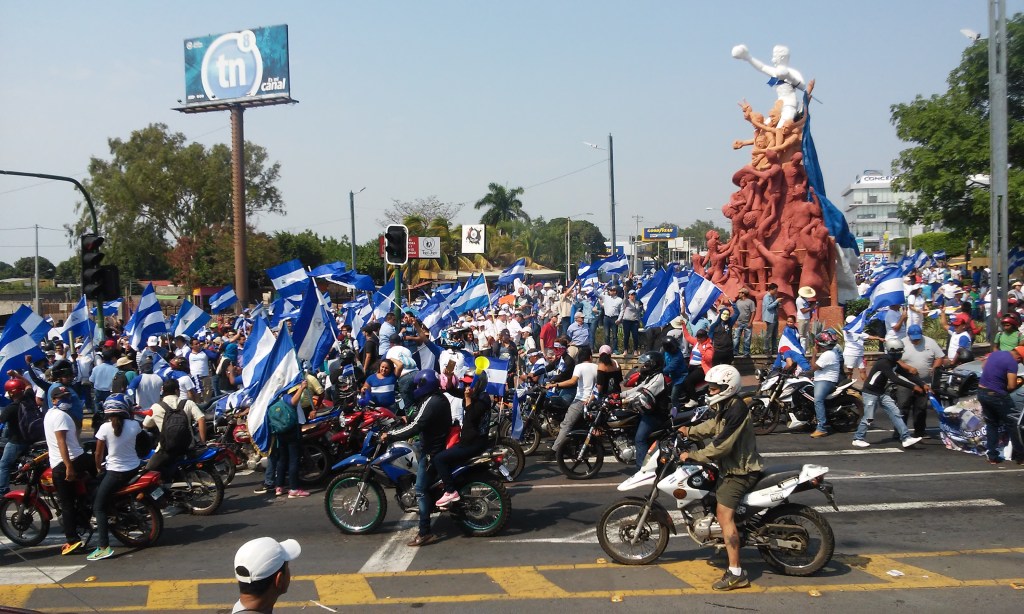
Managua in revolt: the capital in the 2018 wave of protests
Protesters in Nicaragua challenged the power of the Sandinista Front in 2018. The protests spread nationwide, with a quarter occurring in the capital, Managua. Local activists strategically mobilized within the symbolic framework associated with Sandinista memory in certain city areas. The Sandinistas later regained control over these spaces. This article sociologically analyzes this dispute over the capital space.

Latin American Faculty of Social Sciences (FLACSO)
Chapter 3. The 2018 wave of protests in Nicaragua: processes, mechanisms and results
This book chapter examines a Wave of protests in Nicaragua from April to September 2018. It analyzes the mechanisms and processes that led to the protests’ emergence, identifying four phases: gestation, installation, transformation, and countermobilization. The study uses original data from January 2016 to October 2019.
In preparation
From Somoza to Ortega: The Catholic Church as a democratizing force in Nicaragua.
The Routledge Handbook of Religion and Politics in Latin America.
This chapter traces the evolving role of the Catholic Church in Nicaragua from the Somoza dictatorship to the Ortega administration. It analyzes how the Church has acted as a moral authority and democratizing force, mediating between state and society while navigating tensions between faith, power, and political legitimacy.
This article examines how perceptions of timing shape strategies of protest and democratic resistance in Central America. Focusing on Nicaragua and Guatemala, it argues that activists’ sense of political timing, rooted in cultural memory and historical experience, mediates between structural constraints and strategic choices in moments of authoritarian threat.
Revolutionaries Look Back: The Sandinista Revolution.
In collaboration with: Markoff, John and Yuan, Weijun.
This collaborative project analyzes retrospective narratives of Nicaraguan revolutionaries to understand how revolutionary experiences are remembered and reinterpreted over time.
Subnational pro-democracy mobilization in the 2023 Wave of Protest in Guatemala.
In collaboration with: Paul Almeida.
This study examines the geography, timing, and organizational dynamics of Guatemala’s 2023 protests. It highlights local factors contributing to the emergence of collective action for democratic renewal.
This research analyzes immigrant communities in Guatemala through interviews and surveys. It compares the experiences of immigrants from different Central American countries and Venezuela and explores the formation of diasporas. The study emphasizes the challenges faced by immigrants and the need for more academic attention to immigrant settlement in Central America.
Compete, accompany, or democratize? The Nicaraguan Catholic Church’s motivations for involvement in the 2018 wave of protest.
The Catholic Church played a crucial role by supporting Nicaraguan protesters in 2018, providing resources, and engaging in negotiations. This article analyzes the extent and reasons for the Church’s contribution to the mass mobilization, drawing on extensive fieldwork. Working paper awarded with the Norman P. Hummon Memorial Research Award for Outstanding Research (2023).
 Sergio M. Cabrales