Teaching at a university is a powerful way to promote solidarity and social change. It’s not just an academic task; it’s a commitment to shaping competent and compassionate professionals who can make a real impact on the world. I’ve seen evidence of this transformation through the ten courses I’ve taught in Spanish and English, reaching over six hundred undergraduate students in the United States, Nicaragua, and Guatemala.
Undergraduate Courses
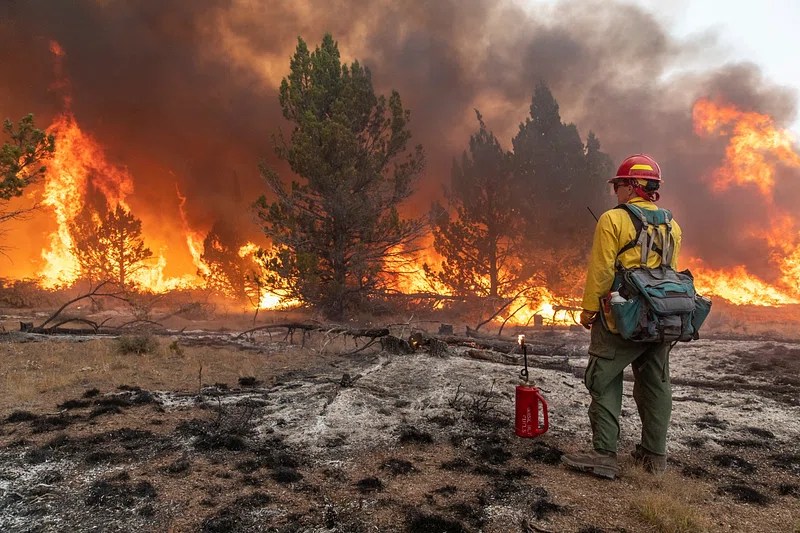
This course explores the current state of the environment and its relationship with societies globally. It covers the connections between the environment and human societies, including mobilization, disasters, and climate change. Additionally, it examines the social, economic, and political factors contributing to environmental impacts.

This course explore the interaction between political institutions and societies. It covers theoretical foundations, the role of states, and how social actors and civil society interact with power. Students engage with current discussions and practical applications of the theory.

This course provides an interactive exploration of the foundations of modern sociological theory through the study of key 18th, 19th, and early 20th-century social theorists such as Marx, Durkheim, and Weber. Students develop an inductive approach to engage with classic works directly and explore practical applications of the theoretical background in various settings.
In this course, students analyze social movements, including their definitions, theoretical approaches, dynamics, and real-life examples from the United States and the Global South.
The course explores globalization’s impact on society, covering sociology fundamentals, debates on agency and structure, and globalization’s influence on economics, values, organizations, health, religion, and the environment. It also addresses globalization’s problems and potential solutions with real-world examples.
Basic Statistic
(Teaching Assistant)
This course introduces statistical methods for students interested in data analysis. Topics include descriptive statistics, probability, sampling, experiments, hypothesis testing, regression, and variance analysis.
Introducción a Sociología
(Introduction to Sociology)
This course, taught in Spanish, provides an interactive study of sociological theory through the works of Marx, Durkheim, and Weber. It emphasizes a sociological understanding of social problems in Central America.
Metodología de la Investigación
(Research Methods)
This course, taught in Spanish, explores quantitative and qualitative methods for researching relevant issues in the field of communication in Nicaragua and Central America. It contributes to the design of research projects with a humanistic, intercultural, and gender perspective.
Proyectos de Grado
(Thesis Seminars)
In this set of capstone seminars, instructed in Spanish, I mentored students in designing research projects to complete studies at the School of Humanities and Communication. I supervised their thesis and other forms of creative products based on research.
Evaluations

Student at Classical Social Theory
Fall 2022, Pittsburgh
«I enjoyed that the lecture was founded on direct quotes and that we were encouraged to interpret and describe social theories in our own words, like a flipped classroom. I found Professor Cabrales to be a kind and engaging professor, who presented each theorist with academic enthusiasm and an unbiased attitude, facilitating open debate among students.»
Student at Social Movements
Summer 2023, Pittsburgh
«I liked the example based approach to each topic, every lecture we would have many examples to reference and enhance our understanding with. Sociology is my personal favorite social science, as it is a very dynamic subject that can be applied in many different ways. Especially with all the various theories, the examples helped a lot to make sure I understood each topic and could apply it the right way»
Student at Political Sociology
Spring 2023, Pittsburgh
«Professor Cabrales’ lectures were very informative and it was very beneficial to have not only the lecture material provided, but additional information to go along with the slides. The feedback for each assignment was also helpful in ensuring I was on the right track with my biweekly posts, and I have any questions answered on the material»
Student at Society and Environment
Summer 2023, Pittsburgh
«While this class was online, Professor Cabrales kept us engaged from the very first day. We had multiple discussions during each lecture along with short written responses to the lecture topics. The slides were super digestible and allowed Prof. Cabrales to elaborate more in–depth. He was available before each lecture for virtual office hours and presented the different assignments in a concise manner ahead of time»
Professor Mark Paterson’s observation at Societies
Summer 2021, Pittsburgh
«Sergio was always clearly spoken and the pace was good. The slides had a good balance of text and image which wasn’t overwhelming, and there was ample use of examples. Time was allowed for discussion of the concepts as the class went on, not just for clarification of prior concepts but also for applying concepts to the film example from last week, and examples from this week.»
A sample of a session
In this online session during the summer of 2024, I introduced the topic of Non-Movement. I encouraged students to observe and analyze how individuals and organizations, even in quietness, challenge the status quo.
 Sergio M. Cabrales